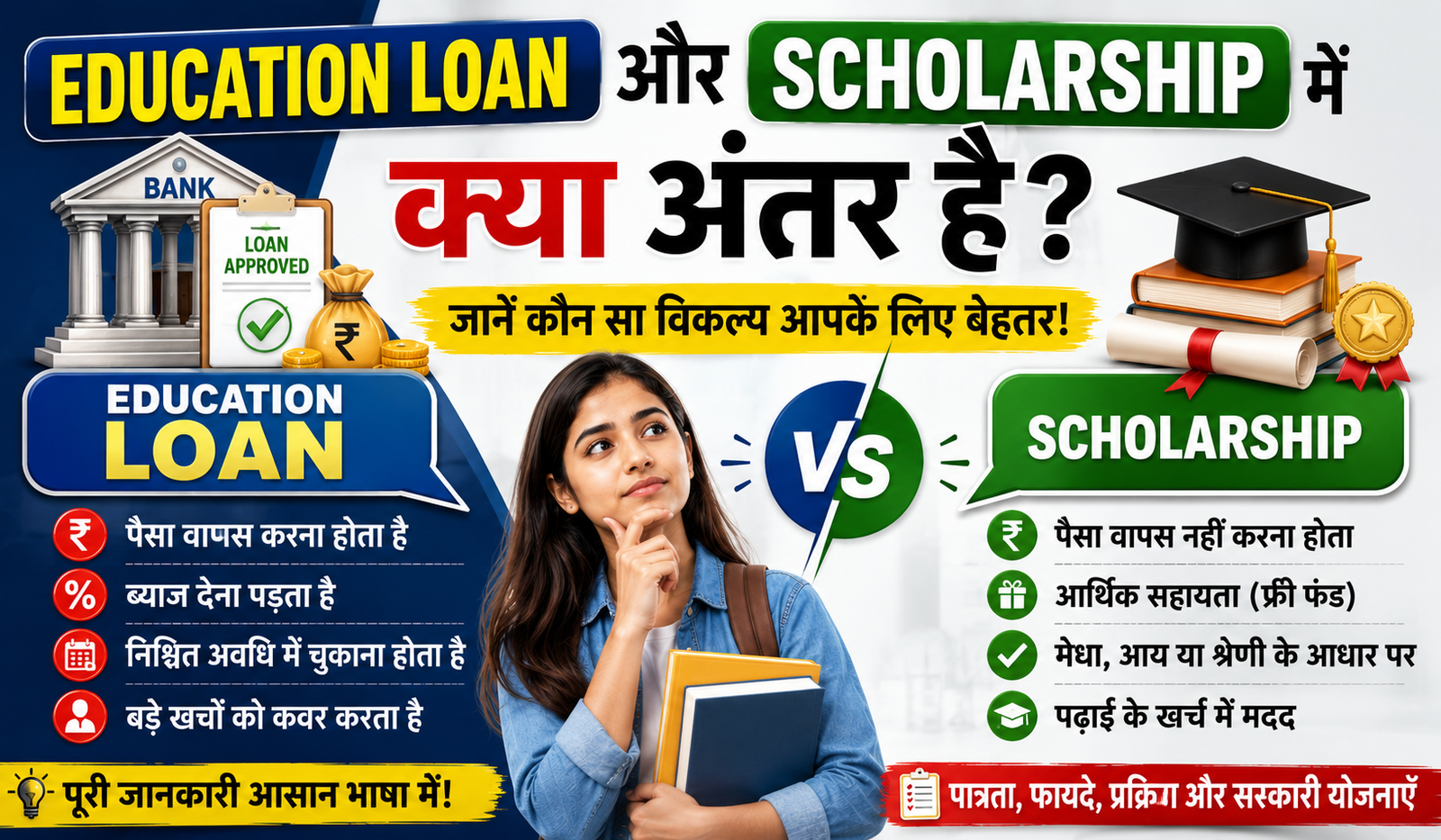
Education Loan vs Scholarship: कॉलेज और यूनिवर्सिटी की पढ़ाई का खर्च आज कई परिवारों के लिए बड़ी चिंता बन गया है। Tuition Fee, Hostel, Books, Laptop और अन्य educational expenses को पूरा करने के लिए Students के पास कई विकल्प होते हैं। इनमें Education Loan और Scholarship सबसे महत्वपूर्ण हैं।
लेकिन बहुत से Students और Parents के मन में सवाल रहता है कि Education Loan और Scholarship में आखिर क्या अंतर है? क्या Scholarship लेने के बाद पैसे वापस करने पड़ते हैं? Education Loan पर ब्याज देना होता है? और अगर Scholarship नहीं मिले तो क्या Government Education Loan में मदद करती है?
इन सभी सवालों के जवाब इस लेख में आसान भाषा में जानिए।
Education Loan और Scholarship क्या होती है?
सबसे पहले दोनों का मतलब समझना जरूरी है।
Scholarship क्या है?
Scholarship एक प्रकार की आर्थिक सहायता है, जो Students को उनकी पढ़ाई जारी रखने में मदद के लिए दी जाती है। यह सहायता सरकार, विश्वविद्यालय, संस्थान या अन्य संगठनों द्वारा दी जा सकती है।
आमतौर पर Scholarship को Education Loan की तरह वापस नहीं करना पड़ता, लेकिन Student को संबंधित Scholarship की eligibility और conditions पूरी करनी होती हैं।
भारत सरकार के National Scholarship Portal (NSP) पर 2026-27 के लिए कई Scholarship Schemes उपलब्ध हैं। NSP के अनुसार Academic Year 2026-27 के लिए portal 1 जून 2026 से खुला है और scholarship application के लिए One Time Registration (OTR) जरूरी है।
Education Loan क्या होता है?
Education Loan बैंक या अन्य eligible financial institution से लिया गया ऋण (Loan) होता है, जिसका इस्तेमाल Higher Education के खर्चों को पूरा करने के लिए किया जाता है।
Loan लेने के बाद Student या उसके co-borrower को निर्धारित नियमों के अनुसार रकम वापस करनी होती है। आमतौर पर Loan पर Interest यानी ब्याज भी लगता है।
Education Loan से Tuition Fee के अलावा कुछ मामलों में Hostel, Books, Equipment, Laptop और अन्य approved educational expenses को भी कवर किया जा सकता है।
Education Loan और Scholarship में सबसे बड़ा अंतर
सबसे आसान भाषा में समझें:
Scholarship = आर्थिक सहायता, जिसे सामान्यतः वापस नहीं करना पड़ता।
Education Loan = उधार लिया गया पैसा, जिसे निर्धारित नियमों के अनुसार वापस करना पड़ता है।
यही दोनों के बीच सबसे बड़ा अंतर है।
Education Loan vs Scholarship: पूरी तुलना
| आधार | Scholarship | Education Loan |
|---|---|---|
| पैसा किस रूप में मिलता है? | Financial Assistance | Loan |
| पैसा वापस करना पड़ता है? | सामान्यतः नहीं | हां |
| ब्याज लगता है? | नहीं | आमतौर पर हां |
| Eligibility | Merit, Income, Category आदि पर निर्भर | Admission, course, credit और lender criteria पर निर्भर |
| Amount | Scheme के अनुसार तय | जरूरत और lender/course के अनुसार |
| Repayment | सामान्यतः नहीं | निर्धारित अवधि में करना होता है |
| किसे मिल सकता है? | Eligible Students | Eligible Students, subject to loan approval |
| Application | Scholarship Portal/Department/Institution | Bank/Loan Portal/Financial Institution |
| Credit History | सामान्यतः जरूरी नहीं | Loan terms के अनुसार महत्वपूर्ण हो सकती है |
| मुख्य उद्देश्य | पढ़ाई के खर्च में सहायता | पढ़ाई के खर्च के लिए वित्त उपलब्ध कराना |
Scholarship के क्या फायदे हैं?
Scholarship का सबसे बड़ा फायदा यह है कि eligible student को financial support मिलता है और सामान्यतः इसे loan की तरह repay नहीं करना पड़ता।
1. पढ़ाई का आर्थिक बोझ कम होता है
Scholarship से Tuition Fee या अन्य eligible educational expenses में सहायता मिल सकती है।
2. Loan की जरूरत कम हो सकती है
अगर Student को अच्छी Scholarship मिल जाती है तो Education Loan की आवश्यकता कम हो सकती है।
3. ब्याज का बोझ नहीं
Scholarship loan नहीं होती, इसलिए उस पर Education Loan की तरह interest repayment नहीं होता।
4. Merit और विशेष परिस्थितियों के आधार पर अवसर
भारत में अलग-अलग categories के Students के लिए अलग Scholarship Schemes उपलब्ध हैं।
NSP पर Merit-based और Welfare-based दोनों तरह की schemes सूचीबद्ध हैं। 2026-27 में Students eligibility के अनुसार एक merit-based scholarship और एक या अधिक welfare-based scholarship schemes के लिए आवेदन कर सकते हैं।
Education Loan के क्या फायदे हैं?
Scholarship हर Student को नहीं मिलती और कई Scholarships की राशि पूरी Education Cost को cover नहीं करती। ऐसे में Education Loan उपयोगी हो सकता है।
1. बड़ी राशि की जरूरत होने पर मदद
अगर College Fee और अन्य खर्च ज्यादा हैं तो Loan के माध्यम से बड़ी financial requirement पूरी की जा सकती है।
2. Higher Education का अवसर
महंगी professional degree या higher education के लिए Education Loan परिवार को तुरंत पूरी राशि उपलब्ध कराने में मदद कर सकता है।
3. Repayment बाद में
Education Loan में आमतौर पर course period के दौरान और उसके बाद निर्धारित moratorium period के अनुसार repayment structure होता है। उदाहरण के तौर पर PM-Vidyalaxmi guidelines में repayment period moratorium period को छोड़कर अधिकतम 15 वर्ष तक बताया गया है।
PM-Vidyalaxmi Scheme क्या है?
Higher Education के लिए Government की महत्वपूर्ण पहल PM-Vidyalaxmi Scheme है।
इसके तहत eligible students को Quality Higher Education Institutions (QHEIs) में merit-based admission मिलने पर collateral-free और guarantor-free education loan की सुविधा दी जाती है। Official guidelines के अनुसार इस loan के लिए family income पर सामान्य loan eligibility के स्तर पर कोई upper income restriction नहीं है, हालांकि interest subvention के लिए अलग income condition लागू होती है।
यानी यह Scholarship नहीं है बल्कि Government-supported Education Loan framework है।
PM-Vidyalaxmi में Interest Subsidy का क्या फायदा है?
PM-Vidyalaxmi के तहत eligible students जिनकी annual family income ₹8 लाख तक है, उन्हें education loan के ₹10 लाख तक के loan amount पर 3% interest subvention का लाभ मिल सकता है, scheme की निर्धारित शर्तों के अनुसार।
यह interest subvention moratorium period यानी course period plus one year के दौरान outstanding loan पर accrued interest के लिए है।
इसका मतलब यह नहीं है कि पूरा Education Loan माफ हो जाता है। Student को loan की मूल राशि और लागू शर्तों के अनुसार अन्य देनदारियों का repayment करना होता है।
Central Sector Interest Subsidy Scheme भी महत्वपूर्ण
Education Loan से जुड़ी एक अन्य महत्वपूर्ण सरकारी व्यवस्था Central Sector Interest Subsidy Scheme (CSIS) है।
Ministry of Education के अनुसार eligible technical/professional higher education students, जिनकी annual family income ₹4.5 लाख तक है, निर्धारित conditions पूरी करने पर education loan के moratorium period के दौरान पूरी interest subsidy का लाभ पा सकते हैं। 2026 में Ministry ने eligible professional/technical courses की सूची से संबंधित public notice भी जारी किया है।
इसलिए Students को यह समझना जरूरी है कि Education Loan लेना और Education Loan पर Government Interest Subsidy मिलना दो अलग बातें हैं।
Scholarship और Education Loan में कौन सा बेहतर है?
इसका जवाब Student की financial situation पर निर्भर करता है।
अगर आपको Scholarship मिल रही है
अगर आपकी Scholarship आपकी Education Cost का बड़ा हिस्सा cover कर रही है, तो पहले Scholarship का लाभ लेना बेहतर हो सकता है।
अगर Scholarship पर्याप्त नहीं है
मान लीजिए College की कुल लागत ₹8 लाख है लेकिन Scholarship से केवल ₹1.5 लाख की सहायता मिलती है। ऐसे में बाकी खर्च के लिए Education Loan या अन्य funding options पर विचार किया जा सकता है।
अगर Scholarship नहीं मिली
अगर Student Scholarship के लिए eligible नहीं है या application approve नहीं हुआ है, तो Education Loan एक alternative हो सकता है।
क्या Scholarship और Education Loan दोनों लिए जा सकते हैं?
यह सबसे महत्वपूर्ण सवालों में से एक है।
इसका कोई एक universal answer नहीं है।
हर Scholarship Scheme और Loan product के rules अलग हो सकते हैं।
उदाहरण के लिए, NSP की 2026-27 announcement में Students को eligibility के अनुसार एक merit-based scholarship और एक या अधिक welfare-based scholarship schemes के लिए आवेदन करने की अनुमति बताई गई है। लेकिन किसी specific scholarship की conditions अलग हो सकती हैं।
इसी तरह, Education Loan लेने पर Scholarship eligibility automatically खत्म हो जाए, ऐसा सामान्य नियम मान लेना सही नहीं है।
Student को जिस Scholarship के लिए आवेदन करना है, उसकी official guidelines जरूर पढ़नी चाहिए।
उदाहरण से समझिए
मान लीजिए किसी Student की Engineering की कुल Education Cost है:
₹10 लाख
Student को Scholarship के रूप में:
₹2 लाख
की सहायता मिलती है।
अब Student को बाकी:
₹8 लाख
की आवश्यकता है।
ऐसी स्थिति में, यदि संबंधित scholarship और loan rules इसकी अनुमति देते हैं, तो Student Scholarship का लाभ लेते हुए बाकी requirement के लिए Education Loan पर विचार कर सकता है।
इससे Scholarship से मिलने वाली सहायता Education Loan की जरूरत को कम कर सकती है।
Students को Loan लेने से पहले किन बातों का ध्यान रखना चाहिए?
Education Loan लेना एक financial commitment है। इसलिए जल्दबाजी में फैसला नहीं करना चाहिए।
1. Interest Rate देखें
Loan लेने से पहले interest rate और उसकी calculation समझें।
2. Total Repayment देखें
सिर्फ यह न देखें कि आपको कितने रुपये मिल रहे हैं। यह भी देखें कि पूरी अवधि में कितनी राशि वापस करनी होगी।
3. Moratorium Period समझें
यह पता करें कि repayment कब शुरू होगा और course period के दौरान interest कैसे calculate होगा।
4. Processing और अन्य Charges देखें
Loan agreement में processing fee, insurance और अन्य applicable charges की जानकारी पढ़ें।
5. Course और College की Eligibility देखें
Government-supported loan schemes में specific institutions/courses की conditions हो सकती हैं।
Scholarship के लिए आवेदन करते समय किन बातों का ध्यान रखें?
Scholarship application में भी Students को सावधानी रखनी चाहिए।
- Eligibility पहले check करें।
- Income Certificate की validity देखें।
- Category Certificate जहां आवश्यक हो, तैयार रखें।
- सही bank details दें।
- Academic details documents के अनुसार भरें।
- Application की last date जरूर check करें।
- Institute verification की स्थिति देखें।
- Application submit करने के बाद status track करें।
NSP पर 2026-27 scholarship applications के लिए OTR mandatory है और OTR student के पूरे academic career के लिए unique number के रूप में इस्तेमाल होता है।
Scholarship या Education Loan: किसे चुनें?
Scholarship चुनें अगर:
- आप eligibility criteria पूरा करते हैं।
- आपकी academic performance अच्छी है।
- आपकी category/income आदि के आधार पर scholarship उपलब्ध है।
- Scholarship से आपके education expenses का बड़ा हिस्सा पूरा हो सकता है।
Education Loan पर विचार करें अगर:
- आपको बड़ी रकम की जरूरत है।
- Scholarship पर्याप्त नहीं है।
- आप eligible institution/course में admission ले चुके हैं।
- Loan की repayment आपके भविष्य की income के हिसाब से manageable है।
दोनों का combination कब उपयोगी हो सकता है?
अगर Scholarship आपकी कुल Education Cost का केवल एक हिस्सा cover करती है, तो बाकी जरूरत के लिए Education Loan पर विचार किया जा सकता है—लेकिन दोनों schemes के individual terms और conditions पहले जरूर जांचें।
2026 में Students के लिए सबसे जरूरी बात
2026-27 में Government Scholarship के लिए National Scholarship Portal सक्रिय है। NSP पर कई schemes के आवेदन अलग-अलग deadlines के साथ उपलब्ध हैं। उदाहरण के लिए PM-USP Central Sector Scheme के renewal applications के लिए student application closing date 30 सितंबर 2026 दी गई है, जबकि कई अन्य schemes के लिए deadline 31 अक्टूबर 2026 है।
इसलिए Students को केवल सोशल मीडिया या WhatsApp messages पर भरोसा नहीं करना चाहिए। Scholarship या Education Loan से संबंधित जानकारी हमेशा official Government portal, Ministry guidelines और संबंधित bank/institution से verify करनी चाहिए।
निष्कर्ष: Scholarship बेहतर है या Education Loan?
Scholarship और Education Loan दोनों का उद्देश्य Students को Higher Education हासिल करने में मदद करना है, लेकिन दोनों बिल्कुल अलग financial options हैं।
Scholarship में eligible Student को financial assistance मिलती है और सामान्यतः उसे वापस नहीं करना पड़ता। वहीं Education Loan में Student को रकम वापस करनी होती है और आमतौर पर interest भी देना होता है।
इसलिए अगर आपको अच्छी Scholarship मिल सकती है, तो पहले Scholarship के लिए जरूर आवेदन करें। अगर Scholarship आपकी पूरी जरूरत को cover नहीं करती, तो Education Loan जैसे विकल्पों पर विचार किया जा सकता है।
2026 में NSP Scholarship और PM-Vidyalaxmi जैसे Government-supported options Students के लिए महत्वपूर्ण हैं। लेकिन आवेदन करने से पहले eligibility, income criteria, institution, interest subsidy, repayment और deadline की official conditions को ध्यान से पढ़ना जरूरी है।
Official Websites
National Scholarship Portal (NSP):
National Scholarship Portal
Ministry of Education – PM-Vidyalaxmi:
PM-Vidyalaxmi Scheme Guidelines
FAQs
Q1. क्या Scholarship का पैसा वापस करना पड़ता है?
आमतौर पर Scholarship को loan की तरह वापस नहीं करना पड़ता। हालांकि, संबंधित scheme की terms और conditions लागू होती हैं।
Q2. क्या Education Loan पर ब्याज लगता है?
आमतौर पर Education Loan पर interest लगता है। हालांकि Government की कुछ schemes eligible students को interest subsidy या interest subvention उपलब्ध करा सकती हैं।
Q3. क्या Scholarship और Education Loan दोनों लिए जा सकते हैं?
कुछ परिस्थितियों में दोनों का लाभ संभव हो सकता है, लेकिन यह संबंधित Scholarship और Loan की terms पर निर्भर करता है।
Q4. PM-Vidyalaxmi Scholarship है या Loan?
PM-Vidyalaxmi मुख्य रूप से Education Loan से जुड़ी Government scheme है। इसके तहत eligible students को collateral-free और guarantor-free education loan तथा पात्रता के अनुसार interest subvention की सुविधा मिल सकती है।
Q5. NSP पर Scholarship के लिए OTR जरूरी है?
हां। NSP के अनुसार Scholarship application के लिए OTR यानी One Time Registration जरूरी है।
Disclaimer
यह लेख केवल सामान्य जानकारी और educational awareness के उद्देश्य से प्रकाशित किया गया है। Scholarship, Education Loan, interest subsidy, eligibility, income limit, repayment rules और application dates scheme तथा समय के अनुसार बदल सकते हैं। किसी भी आवेदन या financial decision से पहले संबंधित Government Department, National Scholarship Portal, PM-Vidyalaxmi और संबंधित bank/institution की official guidelines जरूर पढ़ें। DailySamachar.org किसी Scholarship की मंजूरी, Loan approval या financial benefit की गारंटी नहीं देता।